By the Central Mechanical Services LLC team
Licensed Phoenix mechanical contractor - AZ ROC #325571 & #325622
In this article (9 sections)
- 01How your AC circuit breaker protects your home
- 02Why you must never reset a tripped breaker twice
- 03Simple airflow problems that cause an overload
- 04Common air conditioner electrical problems
- 05The difference between a bad breaker and a bad AC
- 06What a professional electrical diagnosis includes
- 07Typical repair costs for AC electrical faults
- 08Frequently asked questions
- 09Get professional AC repair in the Phoenix metro area
A tripped circuit breaker is a safety mechanism doing its exact job. When an ac circuit breaker keeps tripping, your air conditioning system is pulling more electricity than the wiring can safely handle. In Phoenix, where summer temperatures push cooling equipment to its absolute maximum limit, this is a serious warning sign. Resetting a tripped breaker repeatedly risks catastrophic equipment failure and creates a severe electrical fire hazard. This guide covers why breakers trip, what you can safely check yourself, and when you need a professional.
The short version
- A circuit breaker trips to prevent electrical fires. It cuts power when the AC pulls more amps than the wire rating allows.
- If your ac breaker trips immediately after a reset, stop touching it. This usually points to a direct short to ground.
- Dirty condenser coils and failed capacitors are the most common reasons an ac tripping breaker Phoenix residents experience during the summer.
- You can safely check your air filter and hose off your outside unit. Leave the electrical panel and internal components to a licensed technician.
- Most air conditioner electrical problems require a multimeter and a megohmmeter to diagnose properly.
In this article
- How your AC circuit breaker protects your home
- Why you must never reset a tripped breaker twice
- Simple airflow problems that cause an overload
- Common air conditioner electrical problems
- The difference between a bad breaker and a bad AC
- What a professional electrical diagnosis includes
- Typical repair costs for AC electrical faults
- Frequently asked questions
- Get professional AC repair in the Phoenix metro area
How your AC circuit breaker protects your home
Circuit breakers protect the wires inside your walls, not the appliances attached to them. Every wire has a specific ampacity rating. This rating dictates how much electrical current the wire can carry before it gets too hot and melts its insulation.
Air conditioners require a massive amount of power. A standard residential condenser uses a 240-volt circuit and draws anywhere from 15 to 30 amps while running. When components inside the air conditioner fail, or when the system works too hard against extreme heat, the amperage spikes. If a system on a 30-amp circuit starts pulling 45 amps, the wires begin to overheat. The circuit breaker detects this excess current and snaps shut. This kills the power and prevents a fire.
Why you must never reset a tripped breaker twice
Homeowners often treat a tripped breaker as a minor nuisance. They flip it back on and wait for the cool air to return. You can reset a breaker exactly once. Power surges from the grid or brief voltage drops during a summer storm can cause a nuisance trip.
If the ac breaker trips immediately after you reset it, leave it alone. The system is experiencing a hard electrical short. This means a bare wire is touching grounded metal, or the internal windings of the compressor have completely failed. Flipping the breaker again and again sends massive jolts of high voltage into a broken system. This repeated action destroys contactors, melts terminal lugs, and ruins compressors that might have otherwise been repairable.
Simple airflow problems that cause an overload
Before you call a technician, you can check two basic airflow issues. Air conditioners move heat. When they cannot move air, they cannot move heat. This causes the system to run hotter and pull more electricity.
First, check your indoor air filter. A clogged filter suffocates the blower motor. The motor strains to pull air through the dirt. This strain requires more electricity. Eventually, the blower motor overheats and trips the breaker.
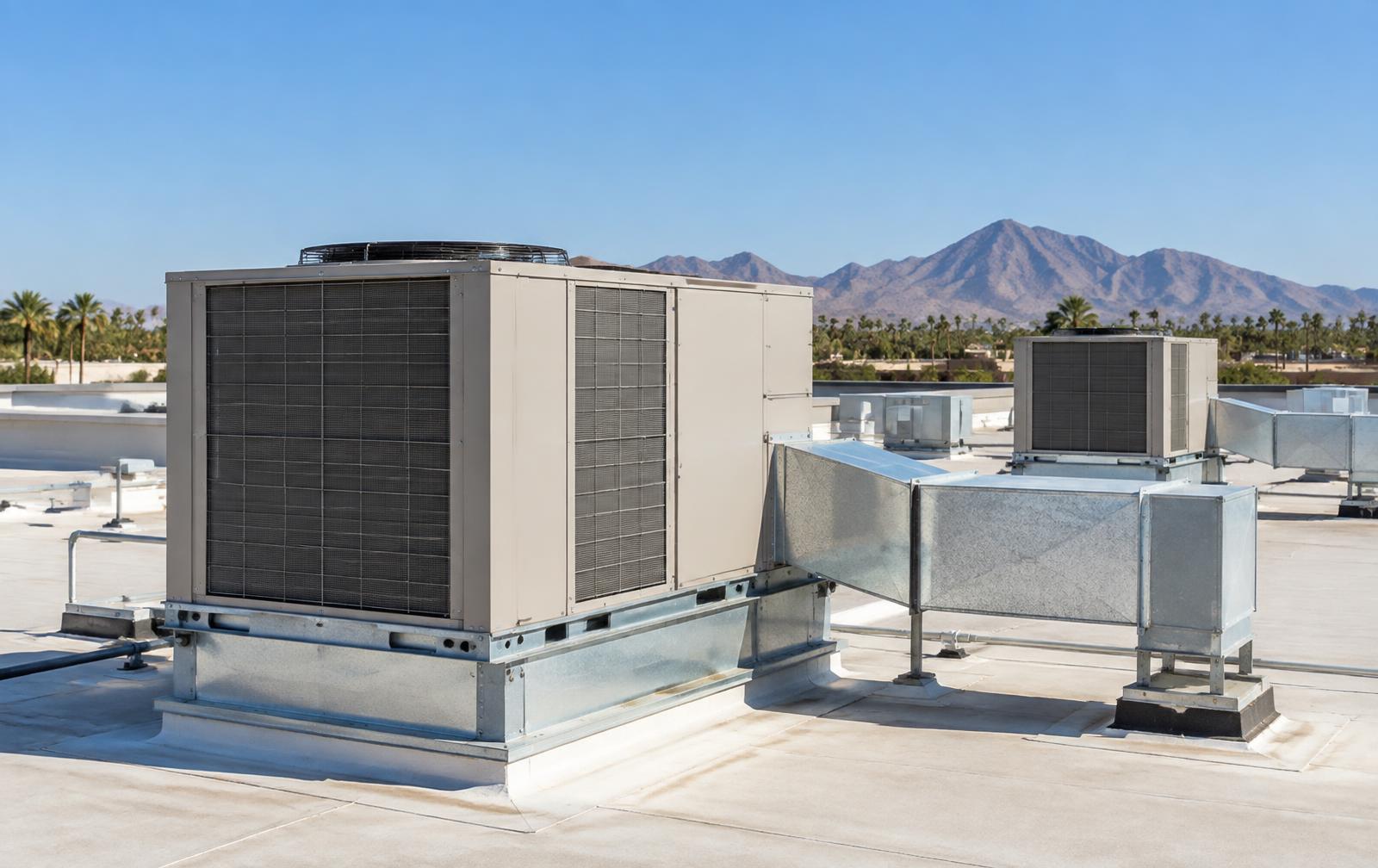
Second, inspect the outside condenser unit. In Phoenix, monsoon dust and debris pack tightly into the aluminum coil fins. The condenser fan attempts to pull air through these dirty coils to cool the hot refrigerant. When the coils are blocked, the refrigerant stays hot. The pressure inside the sealed system skyrockets. The compressor must work twice as hard to pump against this high pressure. This extreme workload spikes the amp draw until the breaker shuts the system down. You can safely turn off the power and gently wash the outside coils with a garden hose.
Common air conditioner electrical problems
If the filters and coils are clean, the system has a mechanical or electrical failure. Several common parts cause high amp draws.
Failed capacitors The run capacitor acts like a battery that provides a massive jolt of phase-shifted energy to start the compressor. When a capacitor dies, the compressor receives power but lacks the torque to spin. It sits locked in place, humming loudly. This condition pulls Locked Rotor Amps (LRA), which is typically five to seven times the normal running current. The breaker sees this massive spike and trips in seconds.
Broken condenser fan motors The fan on top of the outside unit rejects heat into the sky. If the fan motor bearings seize or the motor burns out, the fan stops spinning. The compressor continues to run, but the heat remains trapped inside the cabinet. The system overheats rapidly and trips the thermal overload switch or the main circuit breaker.
Grounded compressors The compressor is a sealed steel shell containing a motor and a pump. The electrical windings inside are coated with a thin layer of insulation. Over time, acid buildup, extreme heat, or normal wear eats away this insulation. The bare copper wire touches the steel casing. The electricity flows directly into the ground rather than completing its circuit. This causes an instantaneous short, and the breaker trips the moment the thermostat calls for cooling.
The difference between a bad breaker and a bad AC
Sometimes the air conditioner operates perfectly, but the breaker itself is the problem. Circuit breakers degrade over time. A breaker in a hot Phoenix garage or an exterior panel baking in the afternoon sun wears out faster than one indoors.
Electrical connections also loosen over time due to microscopic expansion and contraction. A loose wire at the breaker terminal creates resistance. Electrical resistance creates heat. Breakers are thermal-magnetic devices. They trip when they detect too much current, but they also trip when they simply get too hot. A loose connection causes the breaker to overheat and trip even if the air conditioner is pulling normal amperage.
What a professional electrical diagnosis includes
A legitimate commercial or residential HVAC technician will not just flip the breaker and hope for the best. Electrical troubleshooting requires specialized tools and a methodical approach.
The technician will check the panel with a multimeter to ensure the incoming voltage is correct. They will measure the amp draw on the wires while the system tries to start. They will test the capacitor using the microfarad setting on their meter.
If the compressor will not start, they will use a megohmmeter (often called a megger). This tool sends a high-voltage pulse through the compressor windings to test the integrity of the insulation. A megger test provides definitive proof of whether a compressor is grounded and needs replacement, or if the problem is a smaller starting component.
Typical repair costs for AC electrical faults
Repair costs depend entirely on which component failed.
Replacing a weak or degraded circuit breaker usually costs between $150 and $300. This requires a qualified technician to work inside the live electrical panel.
A dead capacitor is the cheapest and most common repair. Capacitor replacement typically ranges from $150 to $350, depending on the microfarad rating and the physical size of the part.
Condenser fan motor replacement runs between $400 and $900. The price varies based on whether the unit requires an Original Equipment Manufacturer (OEM) part or if a universal motor fits the application.
A grounded compressor is a catastrophic failure. The repair involves removing the refrigerant, cutting out the old compressor, brazing in a new one, replacing the filter drier, pulling a deep vacuum, and recharging the system. This repair starts at $2,000 and scales up rapidly. For older units out of warranty, replacing the entire condensing unit or the whole system is usually the smarter financial decision.
Frequently asked questions
Can a bad thermostat cause the breaker to trip? Rarely. Thermostats operate on 24-volt low voltage. Circuit breakers monitor 240-volt high voltage. A shorted thermostat wire usually results in a blown low-voltage automotive fuse on the indoor control board, not a tripped breaker at the main electrical panel.
How long does an AC circuit breaker last? Most standard breakers last 30 to 40 years. However, extreme heat and frequent power surges shorten that lifespan. A breaker that has tripped dozens of times weakens internally and requires replacement much sooner.
Should I turn off the AC at the thermostat if the breaker trips? Yes. Always turn the thermostat to the off position before you touch the electrical panel. This prevents the air conditioner from trying to start the exact second you restore power. It allows you to control the startup process and listen for unusual humming or buzzing at the outdoor unit.
Get professional AC repair in the Phoenix metro area
Electrical faults do not fix themselves. If your system trips the breaker, leaves you without cooling, and puts your property at risk, you need an accurate diagnosis fast. Central Mechanical Services provides expert residential, commercial, and HVAC service across Phoenix, Scottsdale, Mesa, Tempe, Chandler, Gilbert, Glendale, Peoria, Surprise, Avondale, and Buckeye.
Our EPA-certified technicians carry the diagnostic tools required to trace complex electrical faults, test compressors, and replace failed components safely. We hold AZ ROC #325571 (CR-39 HVAC and Refrigeration) and AZ ROC #325622 (CR-37 Plumbing) licenses. Call Central Mechanical Services for 24/7 emergency dispatch and let our team get your cooling system running safely again.
Need a Phoenix tech today?
Talk to a real Valley dispatcher - same-day appointments and live answer 24/7.