By the Central Mechanical Services LLC team
Licensed Phoenix mechanical contractor - AZ ROC #325571 & #325622
In this article (8 sections)
- 01Drain keeps clogging Phoenix? Why the main line is usually the problem
- 02Warning signs that a main sewer line is failing
- 03What a professional drain cleaning Phoenix service call includes
- 04Local fixture blockage versus a main line failure
- 05Repair, line, or replace a failing sewer line
- 06What drives sewer repair and drain clearing costs
- 07Frequently asked questions about clogged drains
- 08Call Central Mechanical Services for permanent drain solutions
A plunger solves a temporary blockage. When a drain keeps clogging Phoenix homeowners usually face a structural pipe issue, not a simple hair clog. If water backs up every few weeks, the waste pipe is failing to carry sewage to the municipal tap. A cable can poke a hole through the mess to restore flow for a few days, but the blockage will rebuild until you fix the underlying cause.
This guide covers why residential drains clog repeatedly, how local soil and hard water affect sewer lines, what a professional drain cleaning Phoenix service call includes, and how to decide between trenchless repair and traditional excavation. Central Mechanical Services LLC is a Phoenix mechanical contractor licensed under AZ ROC #325571 (CR-39 HVAC and Refrigeration) and AZ ROC #325622 (CR-37 Plumbing). We hold a KB-1 Dual Building Contractor license, carry full bonding and insurance, and provide residential and commercial plumbing services across the Valley.
Drain keeps clogging Phoenix? Why the main line is usually the problem
If you clear a clog and it returns a month later, the pipe itself is compromised. A standard drain snake cuts a narrow path through a blockage. It does not fix the reason the blockage formed. In the Phoenix area, main sewer lines fail for three specific reasons related to age, water quality, and soil conditions.
First, tree roots destroy older pipes. Older neighborhoods in central Phoenix, Tempe, and Mesa often have clay or cast iron sewer lines. Trees in arid climates aggressively seek moisture. Roots wrap around clay pipes, crush the joints, and grow directly into the line. Once inside, they act like a net that catches toilet paper and solid waste.
Second, hard water creates scale. Phoenix water contains high levels of dissolved calcium and magnesium. Over decades, these minerals bond to the inside of your pipes. This rough, calcified surface slows down wastewater and catches grease, soap scum, and food particles. A pipe that was originally four inches wide might choke down to two inches of usable space.
Third, expansive soils create bellies in the line. The dirt under your home expands when wet and shrinks when dry. Over time, this shifting causes long runs of PVC or cast iron pipe to sag. The sagging section creates a belly where standing water and solid waste pool permanently instead of draining by gravity to the city main.
Warning signs that a main sewer line is failing
A simple clogged drain Phoenix homeowners face usually starts at a single sink. A main sewer line problem affects the whole house. Because all the drains in your home connect to one primary pipe under the slab or yard, a restriction in that pipe pushes sewage backward.
Water always seeks the lowest point. If you flush a master bathroom toilet and water comes up in the master bathtub, the main line is blocked. The bathtub drain sits lower than the toilet bowl, so the backed up water takes the easiest exit.
Gurgling sounds point to trapped air. When a main line is partially blocked, water struggles to pass. This creates a vacuum. Flushing a toilet forces that trapped air back up through the p-traps of nearby sinks or showers, causing a distinct gurgling noise.
Sewage odors inside the home mean the plumbing traps are empty or the pipe is broken. A healthy plumbing system traps sewer gas behind a small pool of water in the u-shaped pipe under every drain. If the main line backs up, the pressure can siphon that water away, allowing raw sewer gas into your bathrooms.
An overflowing cleanout confirms an exterior problem. The plastic or brass cap in your front yard is the main sewer cleanout. If you see toilet paper or raw sewage pooling around this cap, the blockage lives somewhere between the front of your house and the municipal sewer tap at the street.
What a professional drain cleaning Phoenix service call includes
Pouring liquid chemicals down a slow sink damages pipes and rarely clears a severe blockage. A professional plumbing approach relies on mechanical clearing and visual inspection to guarantee the pipe is actually open.
Cabling, also called snaking, uses a motorized steel cable with a cutting head to physically break up roots and solid waste. This restores flow quickly. However, cabling alone is a temporary fix for grease or sludge. The cable simply stirs the sludge, which collapses back in on itself days later.
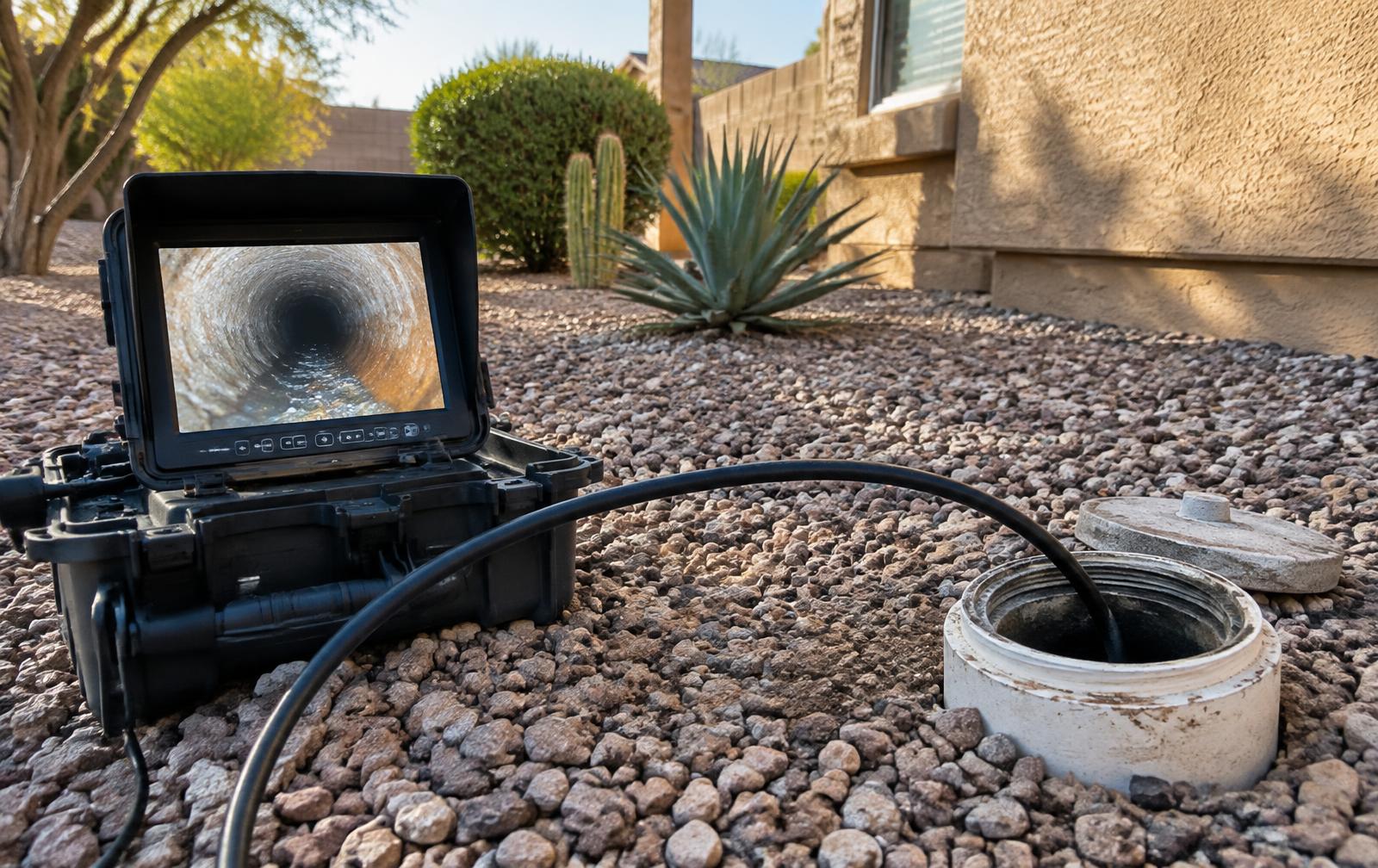
Video line scoping is mandatory for recurring clogs. A plumber pushes a high definition camera down the pipe to record the interior walls. This is the only reliable way to diagnose a belly, a crushed pipe, or a severe root intrusion. The camera head emits a signal that a plumber tracks above ground. This allows the technician to mark the exact depth and location of a broken pipe in your yard. Never accept a major sewer repair quote without seeing the camera footage yourself.
Hydro jetting is the permanent solution for scale and sludge. A specialized machine blasts high pressure water backward through the pipe. Operating at up to 4,000 PSI, the water strips hard water scale, grease, and small roots entirely off the pipe walls. Hydro jetting restores the pipe to its original inner diameter and prevents future buildup.
Local fixture blockage versus a main line failure
You need to know where the problem lives before approving a repair. The location of the backup tells you which pipe failed.
If only the kitchen sink drains slowly, the blockage is isolated to the branch line serving that specific room. Grease, coffee grounds, and food waste usually cause kitchen clogs. If only a single bathroom sink drains slowly, hair and toothpaste are likely trapped in the local p-trap right under the counter.
If the toilets bubble, the washing machine floods the lowest shower in the house, and no water drains from the property at all, the main sewer line is choked. The main lateral pipe handles every drop of water from the house, so a failure there shuts down the entire plumbing system.
Repair, line, or replace a failing sewer line
When a camera inspection reveals a broken or collapsed pipe, you have three primary ways to fix it. The right choice depends on the pipe material and the severity of the damage.
Trenchless pipe lining (CIPP) repairs the pipe without destroying your yard. If the existing pipe is cracked but retains its round shape, technicians pull an epoxy saturated liner through the old pipe and inflate it. The epoxy cures in place, creating a smooth, structurally sound new pipe inside the old one. This method saves concrete driveways, mature trees, and custom landscaping.
Traditional open trench excavation is required for completely collapsed pipes or severe bellies. If the pipe has lost its shape or sags deeply, a soft liner will just take the shape of the broken pipe. A crew must dig a trench, remove the broken section, pack a proper dirt bed, and lay down new PVC pipe at the correct downward slope.
Spot repairs save money when the damage is isolated. If tree roots have crushed a single joint near the cleanout, you do not need to replace the entire eighty foot run to the street. Plumbers can dig up that specific five foot section, splice in new PVC, and bury it.
What drives sewer repair and drain clearing costs
A simple cable run to clear an isolated clog costs between $150 and $300. Major sewer repairs cost thousands. Four factors drive the final price of the project.
The method dictates the baseline cost. Hydro jetting costs more than cabling because the specialized equipment is expensive and takes longer to stage. Trenchless lining often costs more per foot than open trenching, but it saves thousands of dollars in concrete and landscaping replacement.
The depth of the pipe controls the labor. Digging up a pipe two feet under a dirt yard is fast and requires hand tools. Excavating a pipe six feet deep requires heavy machinery, structural shoring for safety, and significantly more time.
Surface materials dictate restoration costs. Digging through a dirt yard is cheap. Saw cutting a decorative concrete driveway, removing asphalt, or destroying a paver patio adds massive labor and replacement costs to the plumbing bill.
Distance determines material volume. Replacing ten feet of pipe at the edge of the house costs far less than replacing ninety feet of pipe that runs all the way to a city tap in the middle of a busy street.
Frequently asked questions about clogged drains
Are chemical drain cleaners safe for my pipes? No. Liquid drain cleaners rely on lye or sulfuric acid. They generate intense heat that softens PVC pipes and accelerates corrosion in older cast iron lines. They also make the job dangerous for the plumber who eventually has to open the pipe and deal with the trapped acid.
How often should I have my main sewer line cleaned? If your home has newer PVC pipes, no large trees, and you do not pour grease down the drain, you may never need preventive cleaning. If you live in an older home with clay pipes and mature trees, you should plan for annual video scoping and root clearing.
Why does my sink drain perfectly for a week and then stop? When you use a small hand snake on a sludge clog, the cable only pokes a narrow hole through the mess. Water drains slowly, but the sticky sludge quickly collapses back in on itself and seals the pipe again. This requires hydro jetting to permanently clear the walls.
Call Central Mechanical Services for permanent drain solutions
Ignoring a slow drain leads directly to raw sewage backing up inside your home. If you are plunging the same toilet every week or watching water back up into your shower, the pipe needs professional attention before it damages your floors and drywall.
Central Mechanical Services provides emergency leak response, drain cleaning with video line scoping, hydro jetting, repipes, water heater service, and full sewer replacements. We dispatch skilled plumbers who diagnose the real problem instead of selling you another temporary cabling job. We service residential and commercial properties across Phoenix, Scottsdale, Mesa, Tempe, Chandler, Gilbert, Glendale, Peoria, Surprise, Avondale, and Buckeye.
Call our office at 4032 E Broadway Rd Ste 702 or reach out for 24/7 emergency dispatch to get your plumbing system flowing correctly today.
Need a Phoenix tech today?
Talk to a real Valley dispatcher - same-day appointments and live answer 24/7.