By the Central Mechanical Services LLC team
Licensed Phoenix mechanical contractor - AZ ROC #325571 & #325622
In this article (7 sections)
Mesa attics routinely exceed 140 degrees in July. That heat bakes the outer jacket of flexible ductwork until the plastic turns brittle and flakes away. Once the outer vapor barrier fails, the fiberglass insulation degrades, the inner liner tears, and your air conditioner starts pumping cold air directly into the attic.
This guide explains what drives ductwork replacement cost in Mesa, AZ, how to evaluate materials and insulation ratings, what the installation process requires, and how to compare contractor estimates. Central Mechanical Services LLC is a Phoenix mechanical contractor licensed under AZ ROC #325571 (CR-39 HVAC and Refrigeration) and AZ ROC #325622 (CR-37 Plumbing), holds a KB-1 Dual Building Contractor license, and is bonded and insured, with NATE certified and EPA 608 certified technicians handling residential HVAC services across the Valley.
What drives ductwork replacement cost in Mesa, AZ
A complete residential ductwork replacement in Mesa typically costs between $4,500 and $8,500. The final price depends on the size of the home, the accessibility of the attic, and the specific materials used by the contractor.
Attic access and working space Labor is the largest variable in air duct replacement cost. A home with a pitched roof and a tall, open attic allows technicians to move quickly. A flat roof home with restricted crawl spaces forces technicians to cut drywall from the ceiling to access the old ductwork. Drywall demolition and subsequent repairs add significant time and expense to the project.
System size and duct layout A 2,500 square foot house with a 5 ton air conditioner and 16 supply vents requires far more material than a 1,200 square foot house with a 3 ton unit and 8 vents. Contractors price the job based on the linear feet of ducting, the number of supply boots, the size of the return air plenum, and whether the system uses a central trunk line or a radial design where all ducts branch directly from the main plenum.
Asbestos testing and abatement If your home was built before 1980, the original ductwork or joint tape might contain asbestos. Arizona regulations require testing suspicious materials before removal. A standard asbestos test costs between $200 and $400. If a lab detects asbestos, a licensed abatement company must remove the material safely, which increases the total project cost before the new installation can begin.
Choosing insulated AC ducts for Arizona heat
Ductwork materials dictate how efficiently cold air reaches your living space. Most residential systems in Mesa use a combination of rigid sheet metal and flexible ducting to distribute air.
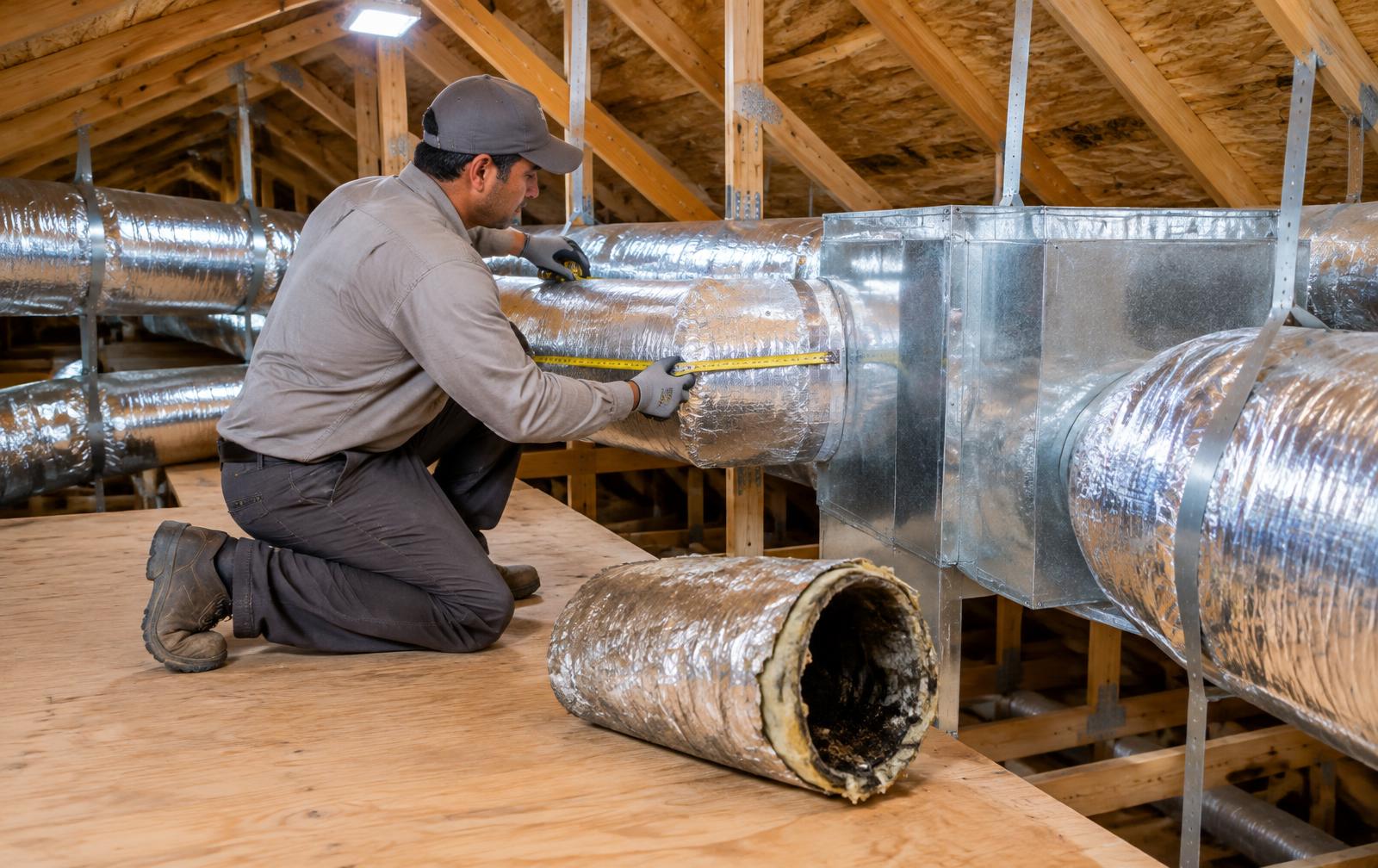
Flexible ducting components Flexible ducting is the standard for attic runs branching out to individual rooms. It consists of a coiled wire helix wrapped in a plastic inner liner, a layer of fiberglass insulation, and an outer vapor barrier. The quality of that outer barrier and the thickness of the insulation determine how long the ducting lasts in the desert.
R-value requirements The R-value measures thermal resistance. Higher numbers mean better insulation. Older homes often have R-4 or R-6 ducts. Today, R-8 insulated AC ducts are the standard recommendation for unconditioned attics in the Phoenix metro area. Upgrading to R-8 prevents heat transfer, ensuring the air remains cold as it travels from the air handler to the farthest bedroom.
Rigid sheet metal plenums The main trunk line connecting directly to the air handler is usually built from rigid sheet metal. Sheet metal handles the highest air pressure without ballooning or tearing. Technicians must wrap sheet metal plenums in thick external insulation and seal every metal seam with mastic paste to prevent air leaks.
Signs it is time for air duct replacement
Ductwork does not last forever. In the desert climate, residential flexible ducts generally fail between 15 and 20 years of age. You can identify failing ductwork by inspecting the attic and monitoring system performance.
Degraded outer jackets Climb into the attic with a flashlight. Look at the silver or black plastic sleeves covering the ducts. If the plastic is cracked, crumbling, or peeling away to expose yellow fiberglass, the duct has failed. Tape cannot fix a disintegrated vapor barrier.
Hot and cold spots Uneven temperatures often point to ductwork issues. If a master bedroom stays five degrees warmer than the rest of the house, the duct feeding that room is likely crushed, disconnected, or leaking. A crushed duct restricts airflow, while a disconnected duct dumps conditioned air into the attic.
Excessive dust and poor air quality When the return side of the ductwork leaks, the blower motor pulls unfiltered attic air, fiberglass particles, and insulation dust into the HVAC system. The system then blows that debris into your living space. If you find yourself dusting furniture constantly, compromised ductwork is a likely culprit.
The ductwork installation Mesa AZ process
Proper installation matters more than the brand of the ducting. Poorly installed ducts restrict airflow, increase static pressure, and shorten the lifespan of the air conditioning compressor.
Tear out and disposal Technicians remove the old ductwork and seal it in heavy plastic bags before carrying it through the house. This containment process prevents decades of accumulated dust, mold spores, and fiberglass from contaminating your home.
Sizing and load calculations The contractor must size the new ducts correctly using industry standard Manual J and Manual D calculations. Manual J determines how much cooling the house needs. Manual D dictates the size of the ducts required to deliver that air. An oversized duct lowers air velocity, meaning the air will not mix properly in the room. An undersized duct creates high static pressure. High static pressure forces the blower motor to work harder, which leads to premature motor failure and excessive noise at the vents.
Stretching and cutting to length Flexible ducting must be pulled tight. If a technician leaves excess slack or allows the duct to snake back and forth, the ridges inside the liner create friction. That friction slows the air down. Professional installers stretch the inner liner tight and cut each run to the exact length required.
Sealing and strapping Mechanical fasteners alone are not enough to prevent air leaks. Technicians secure the ducts to the metal collars with heavy duty tension straps, then coat the connection in mastic paste. Mastic hardens into an airtight, permanent seal. Finally, the ducts are suspended using wide fabric straps. Hanging the ducts prevents them from resting on ceiling joists, which can compress the fiberglass insulation and restrict airflow.
How to compare ductwork replacement estimates
When you request quotes for ductwork replacement in Mesa, you will see a variety of prices and scopes of work. The cheapest bid usually leaves out critical steps. Use these criteria to evaluate the estimates side by side.
Specific material grades A professional estimate lists the exact materials. It should specify R-8 insulated flexible ducting and describe the type of strapping and sealing methods. Reject any quote that simply states "replace ductwork" without listing the R-value.
Mastic sealing at all connections Tape fails in hot attics. Foil tape is useful for temporary holds, but mastic paste is mandatory for permanent seals. Ensure the contract explicitly includes mastic sealing on all plenums, wyes, and register boots.
Air balancing and damper installation New ductwork changes the airflow dynamics of the house. The contractor should install manual volume dampers on each supply run. Dampers allow the technician to restrict or increase the airflow to individual rooms during the final commissioning step, ensuring the entire house cools evenly.
Permits and code compliance The city of Mesa requires permits for major HVAC modifications. A legitimate mechanical contractor includes the permit fee in the estimate and coordinates the final city inspection. Skipping the permit puts you at risk of code violations and complicates future real estate transactions.
Frequently asked questions
Can a contractor patch bad ductwork instead of replacing it? If a single duct run is damaged by a roofer or chewed by rodents, a contractor can replace just that section. However, if the entire system is 20 years old and the plastic jackets are crumbling, patching is a waste of money. The rest of the system will fail shortly after the repair.
Will new ductwork lower my utility bills? Yes. The Department of Energy estimates that typical residential duct systems lose 20 to 30 percent of the air moving through them due to leaks and poor insulation. In Mesa, where APS and SRP time of use plans penalize afternoon power consumption, leaking ducts force your air conditioner to run nonstop during the most expensive hours of the day. Upgrading to sealed R-8 ducts directly reduces power consumption.
How long does a complete duct replacement take? A standard single family home takes a professional crew one to two days to complete. The air conditioning must be turned off while the main plenums are disconnected, so contractors typically schedule this work early in the morning during the summer to minimize discomfort.
Does duct cleaning fix airflow problems? No. Duct cleaning only removes loose dust and debris from inside the liner. It does not repair torn insulation, fix crushed spans, or seal air leaks. If your ducts are old and brittle, the aggressive brushes used in duct cleaning can actually destroy the inner liner.
Schedule a ductwork evaluation in Mesa
Ductwork is the delivery system for your air conditioner. If the ducts are leaking, crushing, or shedding insulation, even the most efficient new AC unit will fail to keep your home comfortable. The first step is a professional evaluation of your attic layout, static pressure, and existing insulation.
Contact Central Mechanical Services to schedule an inspection of your duct system. Our technicians will measure your airflow, inspect the condition of your current ductwork, and provide a detailed, accurate estimate for replacement. Call our office or request service through our website to get your Mesa home cooling efficiently again.
Need a Phoenix tech today?
Talk to a real Valley dispatcher - same-day appointments and live answer 24/7.